

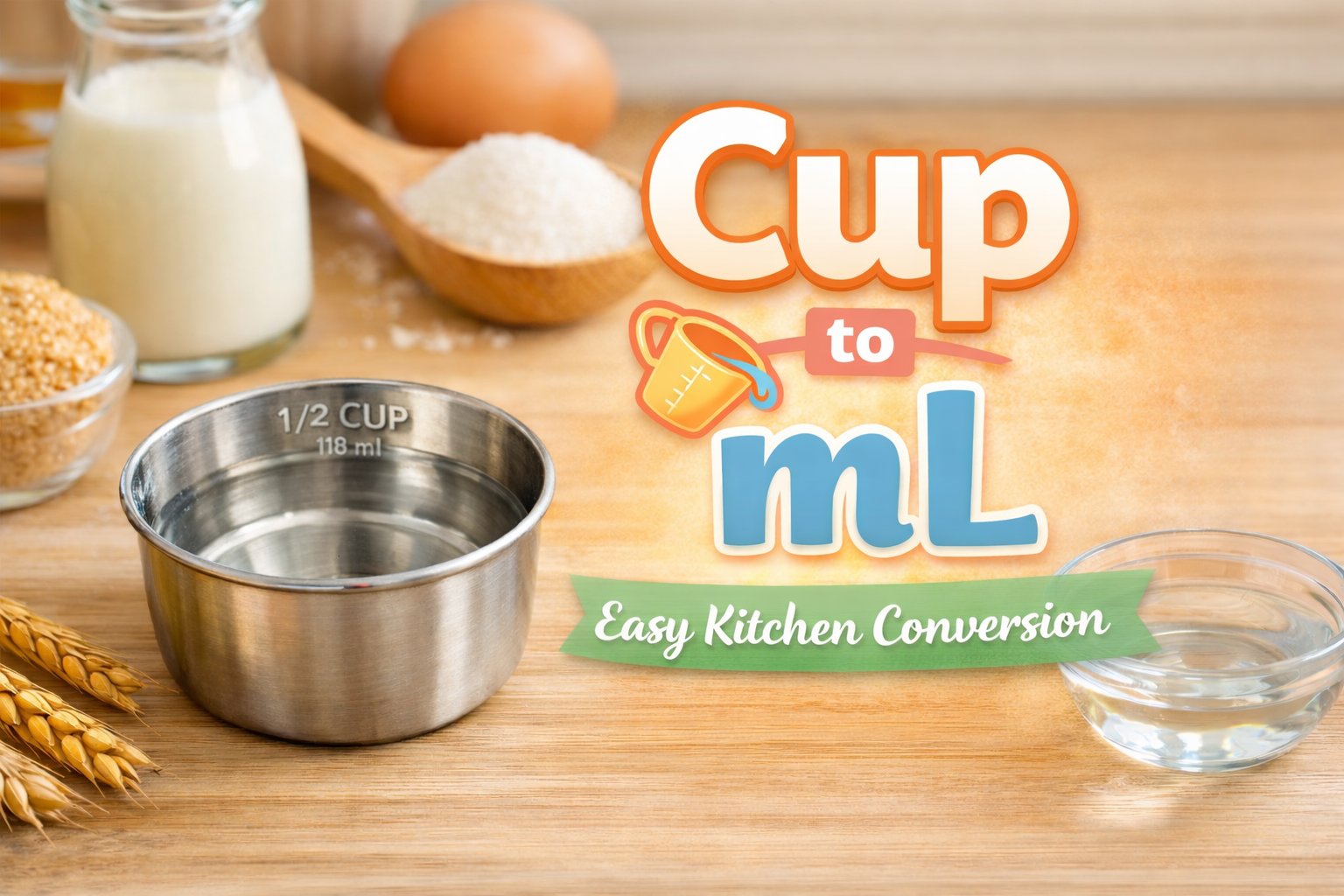
When I’m in the kitchen, one of the first things I check on a recipe is the measurement of liquids. If you’re wondering how much 1/2 cup is in milliliters, the direct answer is 1/2 cup equals about 118 mL. Getting this conversion right can make a huge difference, whether you’re baking cookies, preparing a smoothie, or cooking a sauce. Understanding these small measurements can help even beginner cooks feel confident in the kitchen.
Understanding the Basics of Cup Measurements
Not all cups are created equal. In the United States, the standard U.S. cup is 236.588 mL. Meanwhile, the metric cup, common in other countries, is slightly larger at 250 mL. For 1/2 cup:
- U.S. cup: 1/2 × 236.588 mL = 118.294 mL (≈118 mL)
- Metric cup: 1/2 × 250 mL = 125 mL
Since most American recipes use U.S. cups, sticking to 118 mL is the safest choice for accurate results.
Cup to mL
Why Precision Matters in Cooking
I’ve learned from experience that even small measurement differences can affect your recipe. For example, using slightly too much milk in a cake batter can make it dense and soggy, while too little can leave it dry. Knowing that 1/2 cup equals 118 mL ensures that your dish maintains the intended texture, taste, and consistency.
Tips for Measuring 1/2 Cup
Here’s how I measure 1/2 cup effectively in my kitchen:
- Use the right measuring tool. Liquid measuring cups are ideal for milk, oil, or water. Dry measuring cups are better for flour, sugar, or cocoa.
- Level your dry ingredients. A flat edge makes sure you don’t overfill.
- Pour liquids slowly. Filling the cup to the top line avoids accidental spills or excess.
These small steps prevent mistakes and make cooking more enjoyable.
Quick Equivalents for 1/2 Cup
If you don’t have a 1/2 cup measuring tool on hand, here are some handy conversions:
- 1/2 cup = 8 tablespoons
- 1/2 cup = 24 teaspoons
- 1/2 cup ≈ 118 mL
These equivalents can help when adjusting recipes or scaling ingredients for different servings.
| Cups | Milliliters (mL) | Approximate |
|---|---|---|
| 1/4 | 59.147 | ≈59 mL |
| 1/3 | 78.863 | ≈79 mL |
| 1/2 | 118.294 | ≈118 mL |
| 2/3 | 157.725 | ≈158 mL |
| 3/4 | 177.441 | ≈177 mL |
| 1 | 236.588 | ≈237 mL |
| 1 1/2 | 354.882 | ≈355 mL |
| 2 | 473.176 | ≈473 mL |
When to Use This Conversion
Understanding 1/2 cup in milliliters is especially useful for:
- Baking: Cakes, muffins, and bread often require precise liquid measurements.
- Cooking: Sauces, dressings, and soups benefit from consistent quantities.
- Drinks: Smoothies, coffee, or cocktails can be measured accurately for the perfect taste.
Keeping this conversion in mind saves time and avoids guesswork.
Conclusion
Converting 1/2 cup to milliliters is quick and easy. Remember that 1/2 cup ≈ 118 mL in U.S. measurements. Whether you’re an experienced cook or just starting, this simple knowledge ensures consistent and delicious results every time.
If you found this article informative, feel free to check out our other articles as well.
FAQs About 1/2 Cup to mL
Q1: How many milliliters are in 1/2 cup?
A1: 1/2 cup equals approximately 118 mL in U.S. measurements.
Q2: Can I use tablespoons instead of 1/2 cup?
A2: Yes, 1/2 cup equals 8 tablespoons.
Q3: Does 1/2 cup differ internationally?
A3: Yes, a metric 1/2 cup is 125 mL, slightly more than the U.S. measurement.
Q4: How can I measure 1/2 cup without a cup?
A4: Use 8 tablespoons or 24 teaspoons as an exact substitute.
Q5: Why is 1/2 cup important in recipes?
A5: It provides precision, which is crucial for baking, sauces, and drinks to maintain the intended taste and consistency.