Category: Measurement Guide

  • 3/4 Cup to mL: A Simple Conversion You’ll Actually Use

    3/4 Cup to mL: A Simple Conversion You’ll Actually Use

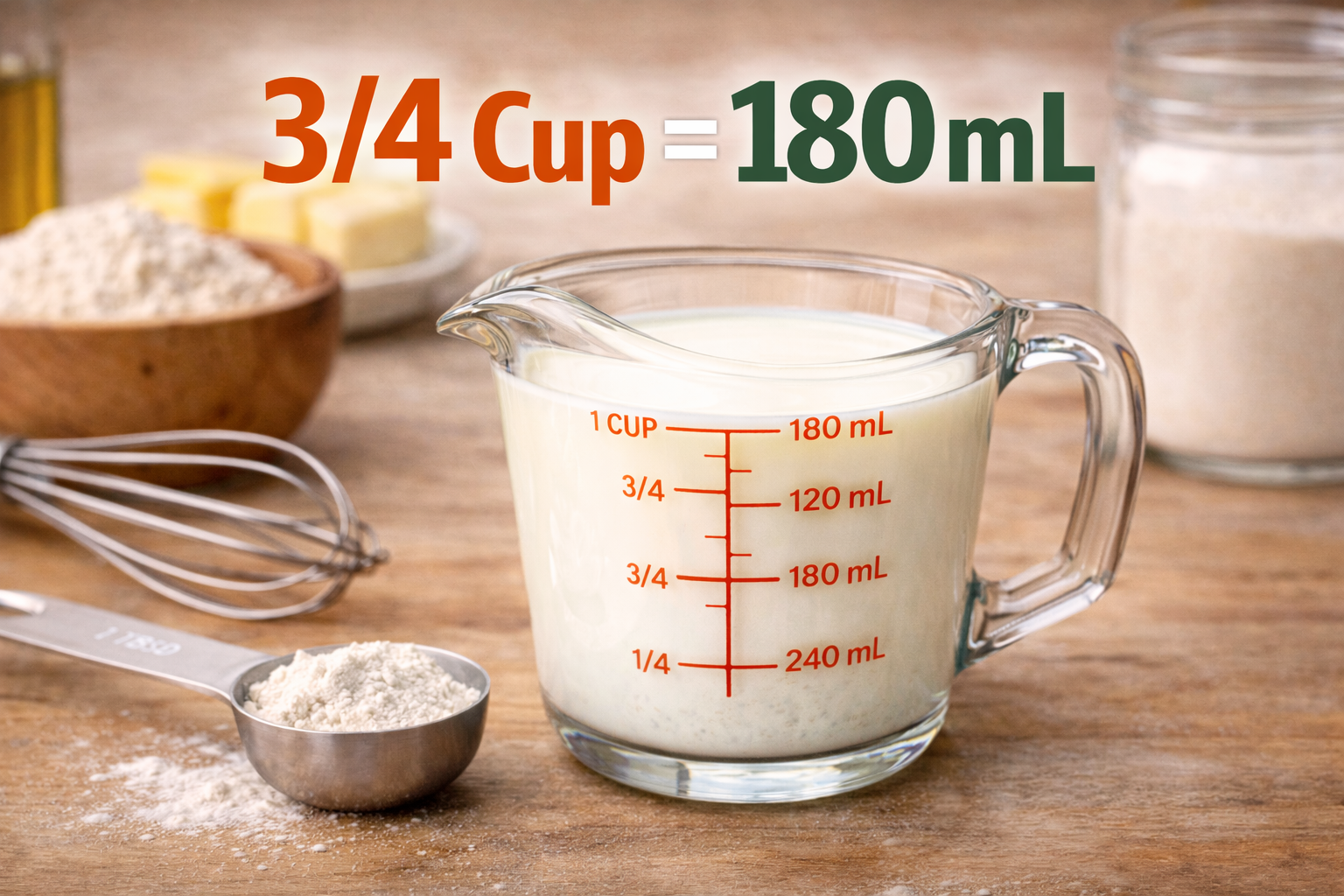
    If you’re short on time and just need the answer, here it is: 3/4 cup equals 180 milliliters in U.S. measurements.
    This conversion shows up more often than you might expect—especially when you’re cooking from older cookbooks, baking desserts, or following recipes written outside the United States. I’ve run into it myself plenty of times, and knowing this one number saves a lot of second-guessing in the kitchen.

    In this guide, I’ll explain where that number comes from, when accuracy really matters, and how to measure 3/4 cup in milliliters without stress.

    Where the 180 mL Comes From

    In the U.S., one standard cup equals 240 milliliters. Since 3/4 cup is three-quarters of a full cup, the math is straightforward.

    240 mL × 0.75 = 180 mL

    Once you remember that base number, converting common fractions becomes much easier. This is especially useful if you cook with metric measuring cups or a kitchen scale that displays milliliters.

    Cup to mL Converter

    When This Conversion Matters Most

    Not every recipe falls apart if you’re a little off, but there are times when precision really counts.

    Baking is the biggest example. Cakes, breads, and pastries rely on balanced liquid ratios. Using too much or too little liquid can change texture, density, and even baking time.

    I’ve also noticed this conversion matters when cooking sauces, custards, or homemade dressings. Liquids measured accurately help flavors stay balanced instead of watered down or overly thick.

    Using Metric Tools in a U.S. Kitchen

    Many U.S. kitchens now include metric measuring cups, digital scales, or multi-unit measuring jugs. If yours shows milliliters, just pour until you reach 180 mL.

    If you don’t have metric tools, here’s a quick workaround:

    • 1/2 cup = 120 mL
    • 1/4 cup = 60 mL

    Together, they make 3/4 cup, which equals 180 mL.

    I’ve used this split-measure trick many times when traveling or cooking in shared kitchens.

    Common Ingredients Measured at 3/4 Cup

    You’ll often see 3/4 cup used for:

    • Milk or cream in pancake and waffle recipes
    • Broth or stock in soups
    • Sugar or oil in baking
    • Yogurt or buttermilk in marinades

    For liquids, the milliliter conversion works cleanly. For dry ingredients, volume still applies, but weight can vary depending on the ingredient.

    Quick Conversion Recap

    To keep it simple:

    • 3/4 cup (U.S.) = 180 mL

    That single number covers most everyday cooking and baking needs.

    U.S. Cup Measurement Milliliters (mL) Common Kitchen Use
    1/4 cup 60 mL Sauces, dressings
    1/2 cup 120 mL Milk, water, broth
    3/4 cup 180 mL Baking, soups, batters
    1 cup 240 mL General cooking

    FAQs

    How many milliliters are in 3/4 cup in the U.S.?
    In the U.S. measurement system, 3/4 cup equals 180 milliliters.

    Is 3/4 cup the same in all countries?
    No. Some countries use different cup sizes, but this article is based on the U.S. standard cup of 240 mL.

    Can I round 180 mL when cooking?
    For casual cooking, rounding to about 175–180 mL is usually fine. For baking, sticking close to 180 mL gives better results.

    Does 3/4 cup equal 180 mL for all liquids?
    Yes, for liquid volume measurement. However, weight differs depending on the liquid.

    What’s the easiest way to measure 3/4 cup in mL?
    Using a measuring jug marked in milliliters and filling it to 180 mL is the quickest and most accurate way.

    Final Thoughts

    Knowing that 3/4 cup equals 180 mL makes cooking smoother, especially when switching between U.S. and metric recipes. It’s one of those small details that quietly improves your confidence in the kitchen.

    If you found this article informative, feel free to check out our other articles as well.
  • 1/3rd Cup to mL: A Simple Conversion You’ll Actually Use

    1/3rd Cup to mL: A Simple Conversion You’ll Actually Use

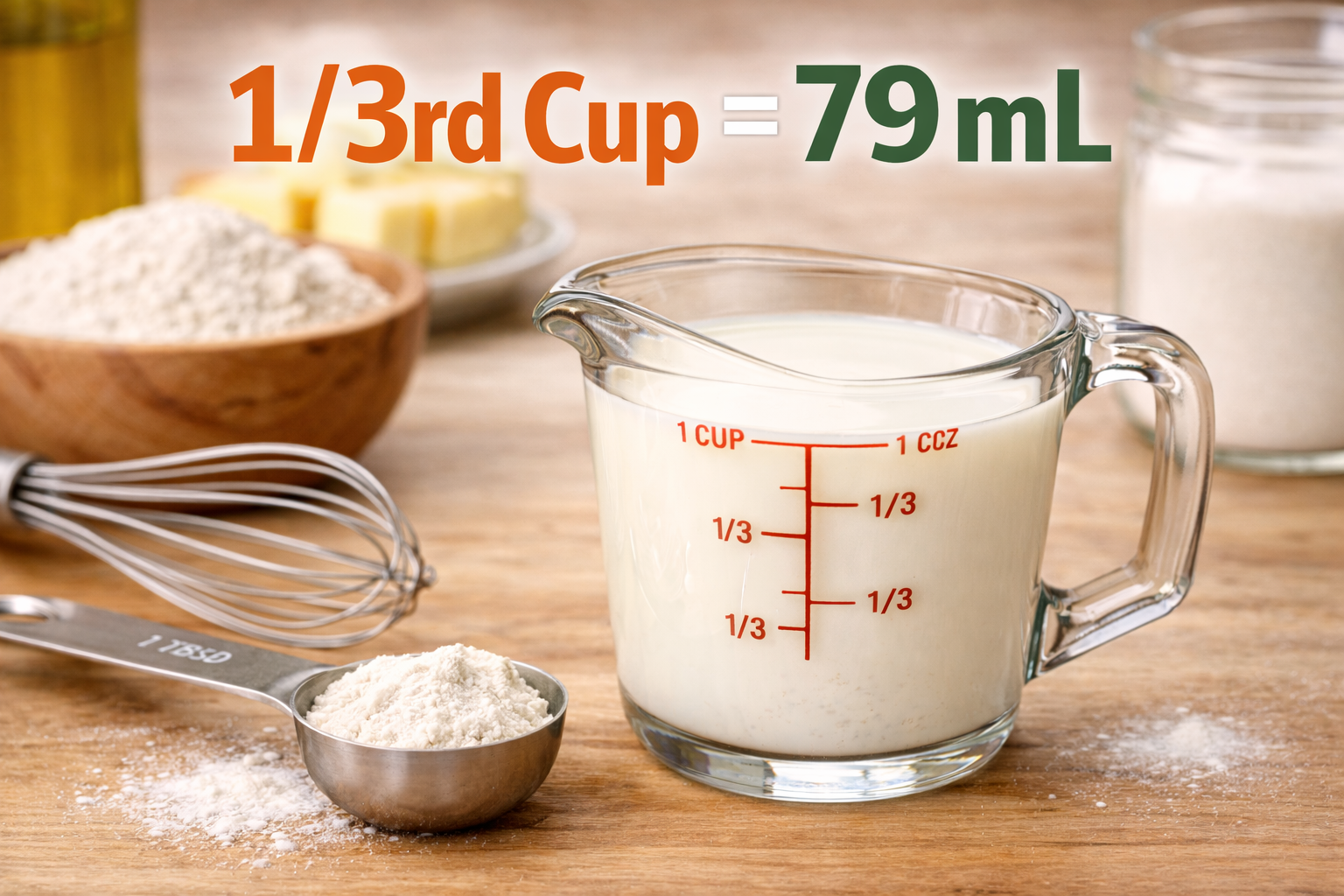
    If you’re looking for a quick answer, here it is: 1/3rd cup equals approximately 79 milliliters (mL) when using a standard U.S. measuring cup. This small but common measurement shows up often in everyday cooking and baking, so knowing it can save time and prevent guesswork in the kitchen.

    I’ve run into this exact conversion more times than I can count, especially when following recipes that mix U.S. cups with metric units. Once you understand where the number comes from, it becomes much easier to remember and apply.

    Understanding the Measurement Behind 1/3rd Cup

    In the United States, one standard cup holds about 236.6 milliliters. When you divide that amount by three, you get roughly 78.9 mL. In most kitchens, this is rounded to 79 mL for convenience and accuracy.

    That slight rounding won’t affect your recipe in any noticeable way. For liquids like water, milk, or oil, the difference is so small that it won’t change the final result. This makes 79 mL a practical and reliable number to work with.

    Cup to mL Conversion

    Why This Conversion Comes Up So Often

    A one-third cup is a popular measurement in recipes because it’s easy to scale. You’ll see it used for ingredients like sugar, flour, yogurt, and sauces. Many international recipes, however, list ingredients in milliliters only.

    Knowing this conversion means you don’t have to stop cooking to search online or switch tools. You can simply measure 79 mL and move on with confidence.

    Using Metric Tools in a U.S. Kitchen

    Not every kitchen has a full set of measuring cups. Some measuring jugs and kitchen scales show milliliters instead. When that happens, understanding cup-to-mL conversions becomes very helpful.

    If a recipe calls for one-third cup and you only have a metric jug, pour until you reach about 79 mL. This works well for liquids and even for some semi-liquid ingredients like honey or maple syrup.

    Helpful Real-Life Examples

    Imagine you’re making a salad dressing that needs one-third cup of olive oil. Using a metric jug, you would measure about 79 mL. If you’re baking muffins and need one-third cup of milk, the same number applies.

    For dry ingredients like flour, it’s best to remember that milliliters measure volume, not weight. While the volume stays the same, the weight can vary depending on the ingredient and how it’s packed.

    Common Mistakes to Avoid

    One common mistake is assuming all cups are the same worldwide. That’s not true. U.S. cups, metric cups, and UK cups can differ slightly. Another error is overfilling the measuring cup, which can throw off the balance of a recipe.

    Sticking to standard conversions and measuring carefully helps keep your results consistent every time.

    Final Thoughts

    Knowing how to convert one-third cup into milliliters is a small skill that makes a big difference in daily cooking. It keeps recipes stress-free and allows you to work comfortably with both U.S. and metric measurements.

    If you found this article informative, feel free to check out our other articles as well.
    FAQs

    How many milliliters are in 1/3rd cup?
    One-third cup is approximately 79 milliliters when using a U.S. measuring cup.

    Is 79 mL exact or rounded?
    It’s a rounded value. The exact amount is about 78.9 mL, which is commonly rounded for ease.

    Does this conversion work for dry ingredients?
    The volume is the same, but dry ingredients can vary in weight. For baking, weighing ingredients is more accurate.

    Can I use this conversion for international recipes?
    Yes, this conversion is especially helpful when following recipes that list measurements in milliliters instead of cups.

    Why do some sources list slightly different numbers?
    Differences usually come from using non-U.S. cup standards or rounding methods.

  • 2/3 Cup to mL: Quick and Simple Conversion Guide

    2/3 Cup to mL: Quick and Simple Conversion Guide

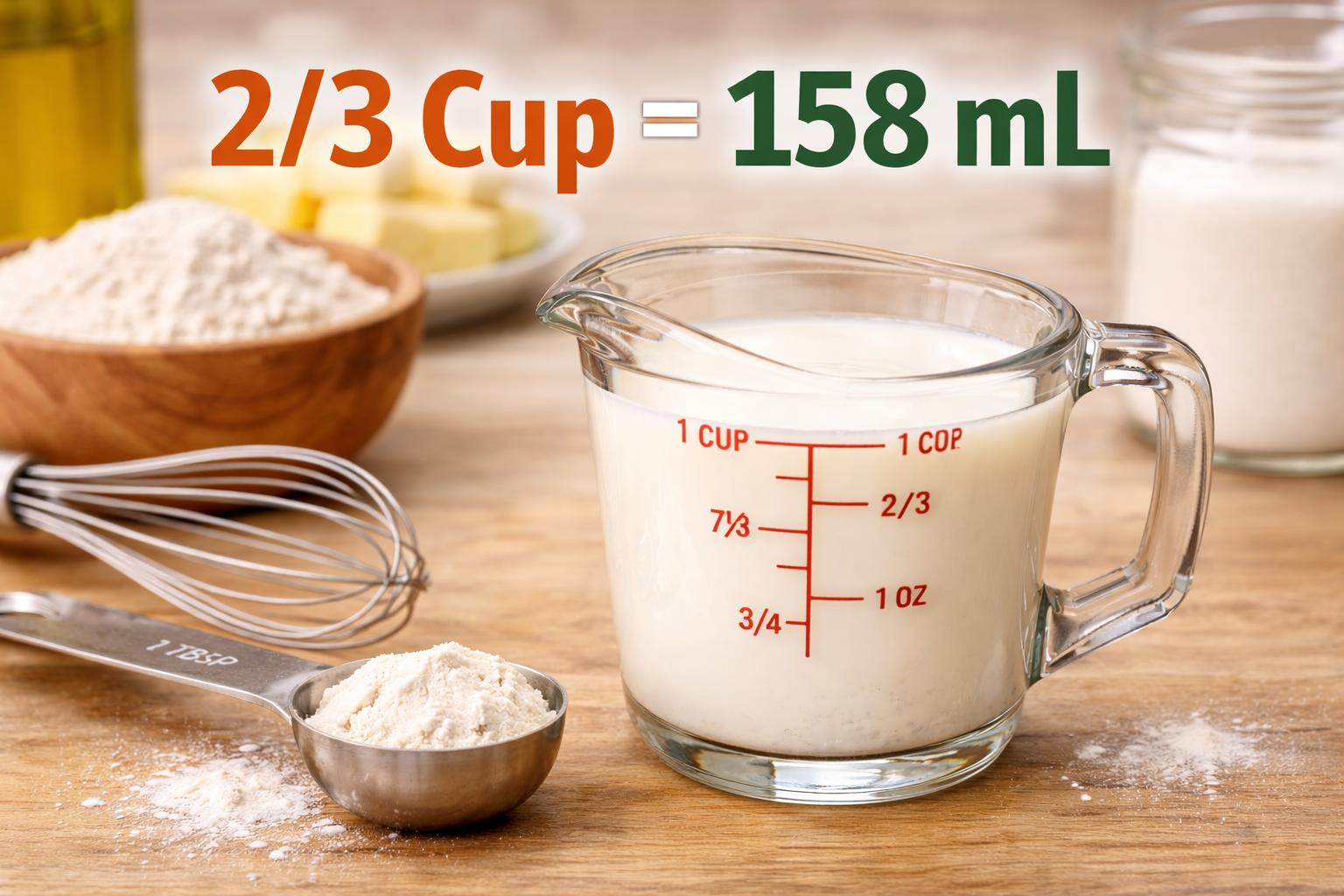
    If you’re cooking or baking and only have a liquid measuring jug in milliliters, you might wonder exactly how much 2/3 cup is in mL. The answer is straightforward: 2/3 cup equals approximately 158 milliliters. Knowing this makes it easy to follow recipes accurately, especially those from online sources or international cookbooks.

    Understanding this conversion can save you from guesswork, whether you’re measuring milk, oil, or any liquid ingredient.

    How to Convert 2/3 Cup to mL

    In the U.S., 1 cup is 240 mL. To find 2/3 of a cup:

    240 × 2 ÷ 3 = 160 mL

    Some references round slightly differently, so you may see 158–160 mL listed. For most kitchen purposes, using 158 mL is accurate enough for both cooking and baking.

    Cups to mL Conversion Tool

    Cups to mL Converter


    Enter a cup value above

    Practical Examples of 2/3 Cup in mL

    Milk

    2/3 cup of milk equals 158 mL. This is enough for a small batch of pancakes or a creamy sauce.

    Oil

    2/3 cup of vegetable or olive oil also equals 158 mL, perfect for dressings or baking recipes.

    Water or Broth

    For soups, 2/3 cup of water or broth is 158 mL, making it easy to adjust recipes precisely.

    Honey or Syrup

    When using thick liquids like honey, measuring 2/3 cup as 158 mL ensures you get the correct sweetness and consistency in your recipes.

    Tips for Accurate Conversion

    Use a Standard Measuring Jug

    When converting to mL, a transparent measuring jug with milliliter marks ensures accuracy. Pour slowly to the correct line for best results.

    Account for Ingredient Type

    Dense liquids like honey or syrup should be measured carefully, ideally using a non-stick measuring cup or lightly greasing the cup to avoid sticking.

    Rounding for Practical Use

    For most home cooking, rounding 2/3 cup to 160 mL works fine. Precision matters more in baking, where a few milliliters can change texture.

    Why This Conversion Matters

    Knowing that 2/3 cup equals 158 mL is especially useful when following international recipes or converting U.S. recipes to metric. It also helps in meal prep and portion control. Once you memorize this, you won’t need to stop and calculate in the middle of cooking.

    Example Table: Cups to mL Conversion

    Cup Measurement Milliliters (mL) Common Kitchen Use
    1/4 cup 60 mL Small sauces, dressings
    1/3 cup 80 mL Baking or batter
    1/2 cup 120 mL Milk, oil, flour
    2/3 cup 158 mL Medium batch recipes, sauces
    3/4 cup 180 mL Cake batters, dressings
    1 cup 240 mL Standard recipe base

    FAQs

    How many mL are in 2/3 cup?
    Approximately 158 milliliters.

    Does this conversion work for both liquids and dry ingredients?
    It works best for liquids. Dry ingredients may require weighing for precision.

    Can I round 158 mL to 160 mL?
    Yes, rounding to 160 mL is fine for most recipes.

    Why is measuring 2/3 cup in mL important?
    It ensures accurate portions and consistency, especially when following international or metric recipes.

    What is the easiest way to measure 2/3 cup in mL?
    Use a standard liquid measuring jug marked in milliliters and pour carefully to 158 mL.

    If you found this article informative, feel free to check out our other articles as well.
  • 1/2 Cup to mL: Simple Conversion for Your Kitchen Needs

    1/2 Cup to mL: Simple Conversion for Your Kitchen Needs

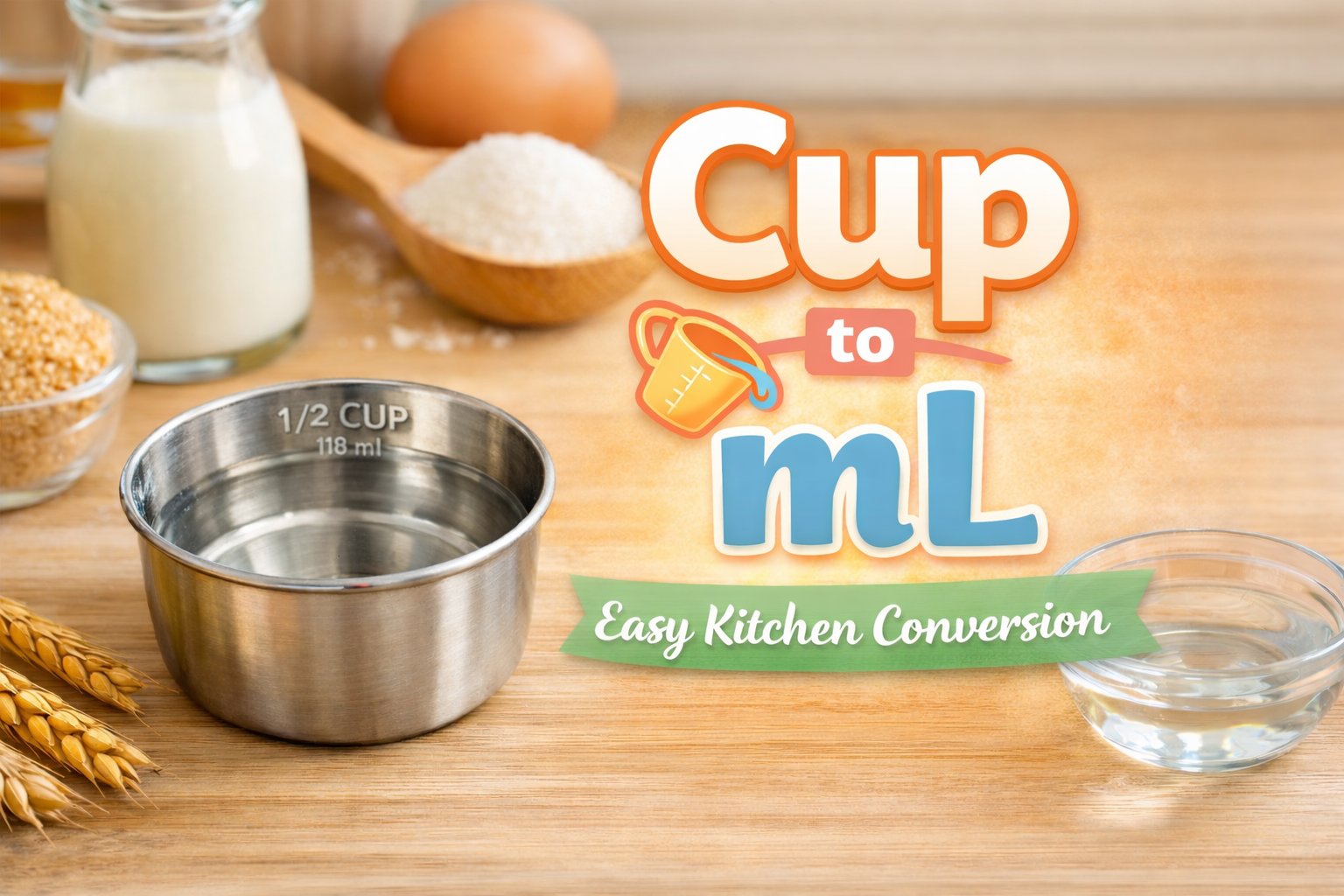
    When I’m in the kitchen, one of the first things I check on a recipe is the measurement of liquids. If you’re wondering how much 1/2 cup is in milliliters, the direct answer is 1/2 cup equals about 118 mL. Getting this conversion right can make a huge difference, whether you’re baking cookies, preparing a smoothie, or cooking a sauce. Understanding these small measurements can help even beginner cooks feel confident in the kitchen.

    Understanding the Basics of Cup Measurements

    Not all cups are created equal. In the United States, the standard U.S. cup is 236.588 mL. Meanwhile, the metric cup, common in other countries, is slightly larger at 250 mL. For 1/2 cup:

    • U.S. cup: 1/2 × 236.588 mL = 118.294 mL (≈118 mL)
    • Metric cup: 1/2 × 250 mL = 125 mL

    Since most American recipes use U.S. cups, sticking to 118 mL is the safest choice for accurate results.

    Cup to mL

    Why Precision Matters in Cooking

    I’ve learned from experience that even small measurement differences can affect your recipe. For example, using slightly too much milk in a cake batter can make it dense and soggy, while too little can leave it dry. Knowing that 1/2 cup equals 118 mL ensures that your dish maintains the intended texture, taste, and consistency.

    Tips for Measuring 1/2 Cup

    Here’s how I measure 1/2 cup effectively in my kitchen:

    • Use the right measuring tool. Liquid measuring cups are ideal for milk, oil, or water. Dry measuring cups are better for flour, sugar, or cocoa.
    • Level your dry ingredients. A flat edge makes sure you don’t overfill.
    • Pour liquids slowly. Filling the cup to the top line avoids accidental spills or excess.

    These small steps prevent mistakes and make cooking more enjoyable.

    Quick Equivalents for 1/2 Cup

    If you don’t have a 1/2 cup measuring tool on hand, here are some handy conversions:

    • 1/2 cup = 8 tablespoons
    • 1/2 cup = 24 teaspoons
    • 1/2 cup ≈ 118 mL

    These equivalents can help when adjusting recipes or scaling ingredients for different servings.

    Cups Milliliters (mL) Approximate
    1/4 59.147 ≈59 mL
    1/3 78.863 ≈79 mL
    1/2 118.294 ≈118 mL
    2/3 157.725 ≈158 mL
    3/4 177.441 ≈177 mL
    1 236.588 ≈237 mL
    1 1/2 354.882 ≈355 mL
    2 473.176 ≈473 mL

    When to Use This Conversion

    Understanding 1/2 cup in milliliters is especially useful for:

    • Baking: Cakes, muffins, and bread often require precise liquid measurements.
    • Cooking: Sauces, dressings, and soups benefit from consistent quantities.
    • Drinks: Smoothies, coffee, or cocktails can be measured accurately for the perfect taste.

    Keeping this conversion in mind saves time and avoids guesswork.

    Conclusion

    Converting 1/2 cup to milliliters is quick and easy. Remember that 1/2 cup ≈ 118 mL in U.S. measurements. Whether you’re an experienced cook or just starting, this simple knowledge ensures consistent and delicious results every time.

    If you found this article informative, feel free to check out our other articles as well.
    FAQs About 1/2 Cup to mL

    Q1: How many milliliters are in 1/2 cup?
    A1: 1/2 cup equals approximately 118 mL in U.S. measurements.

    Q2: Can I use tablespoons instead of 1/2 cup?
    A2: Yes, 1/2 cup equals 8 tablespoons.

    Q3: Does 1/2 cup differ internationally?
    A3: Yes, a metric 1/2 cup is 125 mL, slightly more than the U.S. measurement.

    Q4: How can I measure 1/2 cup without a cup?
    A4: Use 8 tablespoons or 24 teaspoons as an exact substitute.

    Q5: Why is 1/2 cup important in recipes?
    A5: It provides precision, which is crucial for baking, sauces, and drinks to maintain the intended taste and consistency.

  • 1/4 Cup to mL: Quick and Accurate Conversion Guide

    1/4 Cup to mL: Quick and Accurate Conversion Guide

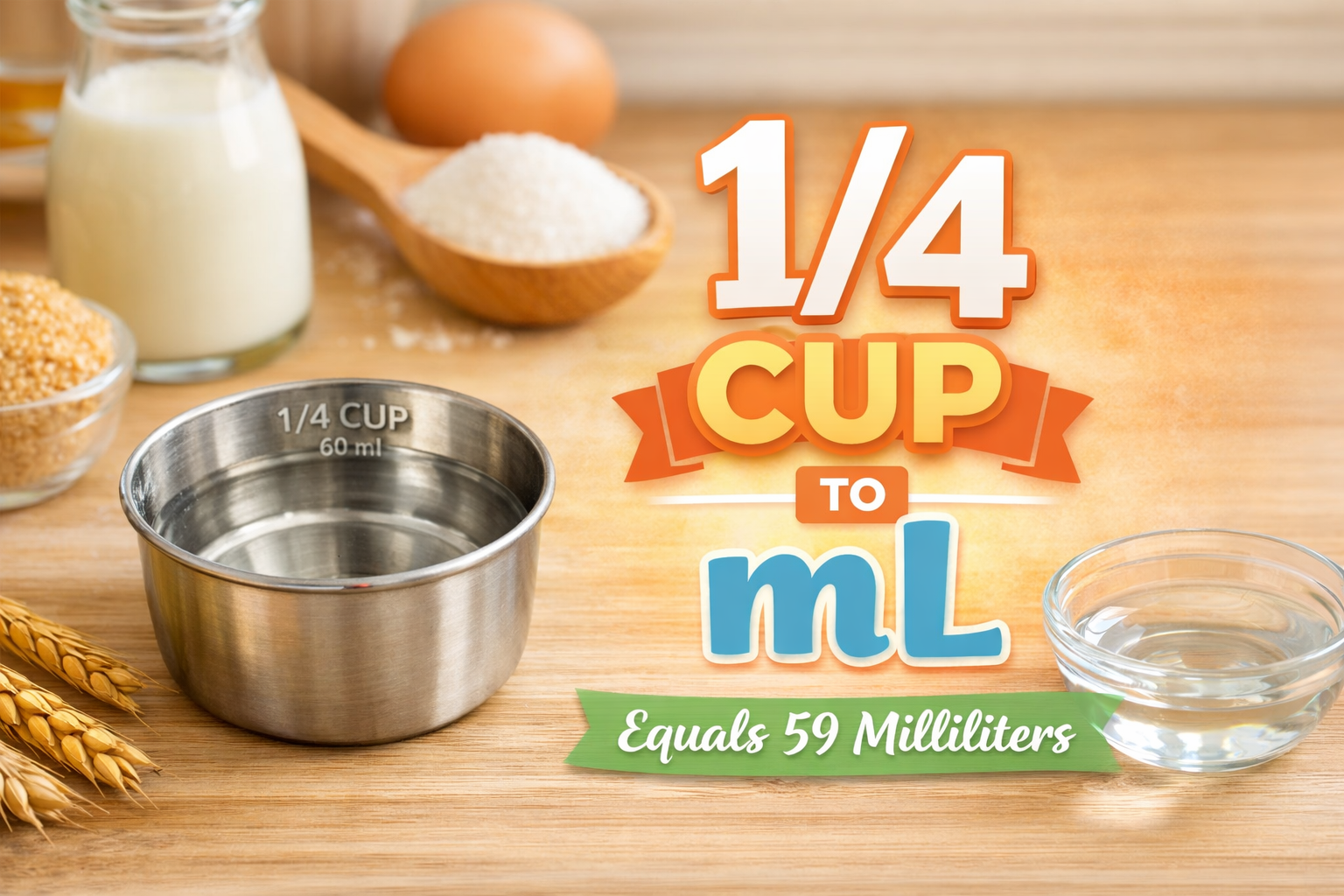
    If you’ve ever followed a recipe, you know how confusing measurements can be, especially when it comes to small amounts. One of the most common questions I get in the kitchen is: “How much is 1/4 cup in milliliters?” The simple answer is 1/4 cup equals approximately 59 mL. This little conversion can make a big difference in baking, cooking, or even mixing drinks, so it’s worth understanding.

    Why 1/4 Cup Matters

    Small measurements like 1/4 cup are often used for ingredients such as oil, milk, or honey. When you’re trying to be precise, even a few milliliters can change the texture of a cake or the balance of flavors in a sauce. For example, adding 10 mL too much or too little of an ingredient like vanilla extract can noticeably affect the final taste. Knowing that 1/4 cup is 59 mL ensures you’re always accurate.

    U.S. Cup vs Metric Cup

    It’s important to know that not all cups are the same. The U.S. cup, which most recipes in the United States use, is 236.588 mL. The metric cup, commonly used in other countries, is 250 mL. So, when converting 1/4 cup, it’s slightly different depending on the standard:

    • U.S. cup: 1/4 × 236.588 mL = 59.147 mL (≈59 mL)
    • Metric cup: 1/4 × 250 mL = 62.5 mL

    For U.S.-based recipes, stick with 59 mL to keep the dish consistent with the intended results.

    Cup to mL Converter

    How to Measure 1/4 Cup Accurately

    Accurate measurement is key for consistent results. Here’s how I usually handle it in my kitchen:

    • Use a measuring cup specifically marked for 1/4 cup. These are usually available as standard dry or liquid measuring cups.
    • Level off dry ingredients like flour or sugar using a straight edge to avoid packing more than needed.
    • Pour liquids carefully to the top line of the 1/4 cup mark to avoid spills or miscalculations.

    Even small errors can make a big difference, especially in baking where precision matters more than in cooking.

    Practical Examples

    Here are some practical equivalents for 1/4 cup:

    • 1/4 cup = 4 tablespoons
    • 1/4 cup = 12 teaspoons
    • 1/4 cup ≈ 59 mL

    Knowing these conversions makes it easier when you don’t have a 1/4 cup measuring tool handy. You can just use tablespoons or teaspoons for small adjustments.

    Cups Milliliters (mL) Approximate
    1/4 59.147 ≈59 mL
    1/3 78.863 ≈79 mL
    1/2 118.294 ≈118 mL
    2/3 157.725 ≈158 mL
    3/4 177.441 ≈177 mL
    1 236.588 ≈237 mL
    1 1/2 354.882 ≈355 mL
    2 473.176 ≈473 mL

    Why Converting to mL is Useful

    Many modern recipes list ingredients in milliliters, especially in beverages, sauces, and international recipes. Having a simple 1/4 cup to mL conversion in mind helps you:

    • Scale recipes accurately
    • Ensure consistent taste
    • Avoid guessing amounts and wasting ingredients

    Even when doubling or halving a recipe, multiplying 59 mL is far simpler than trying to figure out 1/4 cups each time.

    Conclusion

    Converting 1/4 cup to milliliters is simple but essential for accuracy in the kitchen. Remember, 1/4 cup ≈ 59 mL in U.S. measurements. Using this conversion can make baking, cooking, and mixing beverages much easier and ensures your results come out perfectly every time.

    If you found this article informative, feel free to check out our other articles as well.

    FAQs

    Q1: How many milliliters are in 1/4 cup?
    A1: 1/4 cup equals approximately 59 mL in U.S. measurements.

    Q2: Can I use tablespoons instead of 1/4 cup?
    A2: Yes, 1/4 cup equals 4 tablespoons or 12 teaspoons.

    Q3: Does the 1/4 cup measurement differ internationally?
    A3: Yes, a metric 1/4 cup is 62.5 mL, slightly more than the U.S. 59 mL.

    Q4: What is the easiest way to measure 1/4 cup without a measuring cup?
    A4: Use 4 tablespoons or 12 teaspoons as an exact substitute.

    Q5: Why is 1/4 cup important in recipes?
    A5: Small measurements like 1/4 cup help maintain accurate flavor and texture, especially in baking and precise cooking recipes.