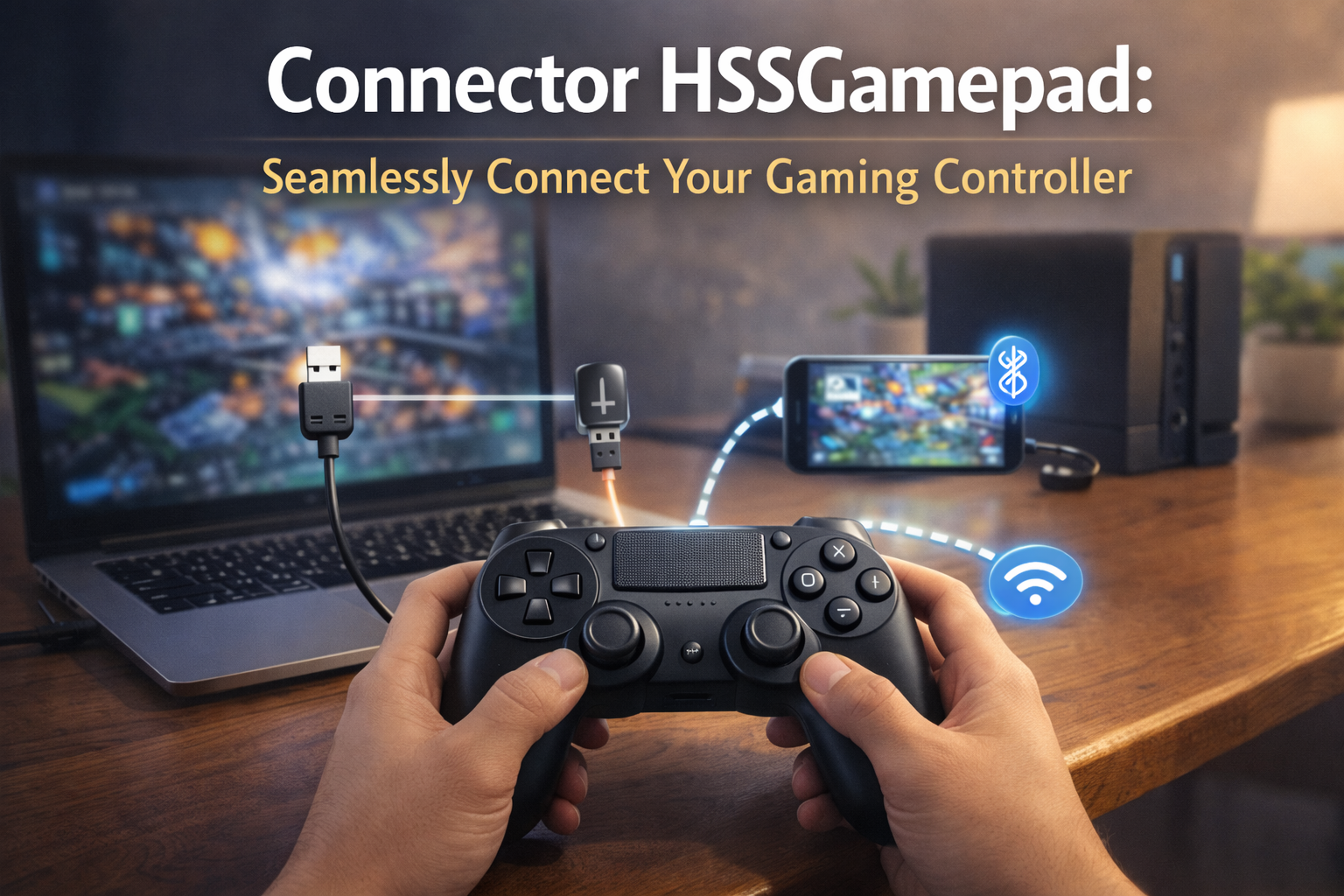
If you’ve been searching for connector HSSGamepad, you’re likely trying to figure out how to get your HSSGamepad working seamlessly with your gaming setup. The direct answer is that the connector acts as the bridge between your controller and your device, whether it’s a PC, console, or mobile platform. However, understanding the different connection types, compatibility, and troubleshooting tips will help you get the best gaming experience.
In this article, I’ll walk you through what the HSSGamepad connector is, how it works, common connectivity methods, setup instructions, troubleshooting tips, and practical advice to enhance your gaming performance. By the end, you’ll feel confident connecting your HSSGamepad safely and efficiently.
What Is the HSSGamepad Connector?
The HSSGamepad connector is the physical or wireless interface that allows your game controller to communicate with your device. Depending on the model, HSSGamepad connectors can be USB-based, Bluetooth-enabled, or use proprietary wireless adapters.
The main goal of the connector is to ensure low-latency, reliable input transmission. In simpler terms, it makes sure that when you press a button on your controller, the action registers instantly on your screen.
Types of HSSGamepad Connectors
HSSGamepads often come with different types of connectors, which are important to understand for proper setup:
1. USB Connector:
This is the most common and straightforward option. Plug the USB cable into your PC, console, or compatible device, and the controller is usually recognized automatically. Some devices may require driver installation.
2. Bluetooth Connector:
For wireless gaming, Bluetooth connectors provide the freedom to move around without being tethered by a cable. Pairing usually involves pressing a button on the controller and connecting through your device’s Bluetooth settings.
3. Proprietary Wireless Adapter:
Some HSSGamepads include a small wireless dongle for ultra-low latency connections. This is often preferred by competitive gamers because it reduces input lag compared to standard Bluetooth.
Understanding which connector type your controller uses is essential for avoiding connectivity issues.
Why the HSSGamepad Connector Matters
You might wonder why the connector itself is important when the controller already exists. From my experience, the connector is often the difference between smooth gameplay and frustrating lag. A poor connection can result in delayed button responses, disconnections, or even unrecognized devices.
Whether you’re playing a fast-paced shooter, racing game, or precision platformer, every millisecond counts, and a reliable connector ensures your controller inputs match the game’s timing perfectly.
How to Connect Your HSSGamepad
Here’s a step-by-step guide to connecting your HSSGamepad using different methods:
USB Connection
- Plug the HSSGamepad USB cable into an available USB port on your device.
- Wait for your system to recognize the controller. On Windows, you may see an installation notification for drivers.
- Once recognized, test the buttons and analog sticks in your game or system settings.
Bluetooth Connection
- Turn on Bluetooth on your PC, mobile device, or console.
- Press the pairing button on your HSSGamepad (usually indicated in the manual).
- Locate the controller in your device’s Bluetooth menu and select it.
- Confirm pairing and test the controller in a game.
Wireless Adapter Connection
- Insert the HSSGamepad wireless dongle into a USB port.
- Turn on the controller. Most dongles automatically pair with the controller.
- Test for input responsiveness in your favorite games.
Common HSSGamepad Connector Issues and Fixes
Even with a straightforward connection, some problems may arise. Here are the most common issues I’ve encountered and how to fix them:
1. Controller Not Detected:
- Ensure the connector type matches your device.
- Try a different USB port or restart your device.
- Update drivers for USB or Bluetooth connections.
2. Input Lag or Delay:
- Use a wired connection if possible.
- For wireless setups, minimize distance and remove obstacles.
- Check for interference from other wireless devices.
3. Disconnections:
- Ensure the battery is fully charged for wireless controllers.
- Re-pair the device if it keeps dropping connection.
- Update firmware for the controller or adapter if available.
4. Partial Button Recognition:
- Some games require mapping the buttons manually in settings.
- Verify the controller is fully compatible with your platform.
Tips for the Best HSSGamepad Experience
- Use Official Connectors: Avoid third-party adapters that may introduce lag or compatibility problems.
- Keep Firmware Updated: HSSGamepad updates often improve connectivity and reduce bugs.
- Test in Multiple Games: Different games may handle controller inputs differently; adjust mapping as needed.
- Minimize Wireless Interference: Keep your controller and adapter away from routers or other high-frequency devices.
Compatibility Considerations
HSSGamepad connectors work with a variety of platforms, but not every combination is guaranteed. Typically:
- PC (Windows/macOS/Linux): USB and Bluetooth connections are supported.
- Mobile Devices (iOS/Android): Bluetooth is preferred; some devices require additional configuration.
- Consoles: Some HSSGamepads may work with PlayStation or Xbox via USB or proprietary adapters, but always check the manual for compatibility.
Being aware of compatibility avoids wasted time troubleshooting connection problems that arise from unsupported devices.
Who Should Use HSSGamepad Connectors?
The HSSGamepad connector is essential for anyone looking for a reliable gaming controller experience. This includes:
- Casual gamers seeking wireless convenience.
- Competitive gamers needing ultra-low latency connections.
- Streamers and content creators who require consistent controller performance.
- Mobile gamers who prefer a physical controller over touch controls.
From personal experience, using the correct connector type improves gameplay dramatically and reduces frustration during intense gaming sessions.
Advantages of Properly Using HSSGamepad Connectors
- Low Latency Gameplay: Critical for competitive and fast-paced games.
- Reliable Connectivity: Reduces interruptions and disconnections.
- Versatility Across Devices: Multiple connection options increase compatibility.
- Ease of Setup: Most connections require just a few steps to start gaming.
These benefits make understanding and properly using HSSGamepad connectors an important part of your gaming setup.
Final Thoughts on HSSGamepad Connectors
The connector is not just a small accessory—it’s a critical component of your HSSGamepad experience. Whether you’re using USB, Bluetooth, or a proprietary wireless adapter, understanding how to connect, troubleshoot, and maintain your controller ensures smooth, responsive, and enjoyable gameplay.
Taking a few extra minutes to set up the connector correctly can save hours of frustration and give you a much better overall gaming experience.
Frequently Asked Questions (FAQs)
What is an HSSGamepad connector?
It’s the interface that allows the HSSGamepad controller to communicate with your device, either via USB, Bluetooth, or a wireless adapter.
Why is my HSSGamepad not connecting?
Common causes include incompatible connector type, outdated drivers, low battery, or interference with wireless signals.
Can I use the HSSGamepad on mobile devices?
Yes, Bluetooth connections generally work with Android and iOS devices. Some USB adapters may also support mobile platforms with OTG cables.
Which connection is best for competitive gaming?
A wired USB connection or proprietary low-latency wireless adapter is ideal to minimize input lag.
Do I need drivers for HSSGamepad?
For USB connections on PCs, yes, you may need to install drivers. Wireless connections usually do not require additional drivers.
Can multiple HSSGamepads be connected at the same time?
Yes, with proper support from your system and sufficient USB or Bluetooth capacity, multiple controllers can be used simultaneously.
If you found this article informative, feel free to check out our other articles as well.
Leave a Reply