

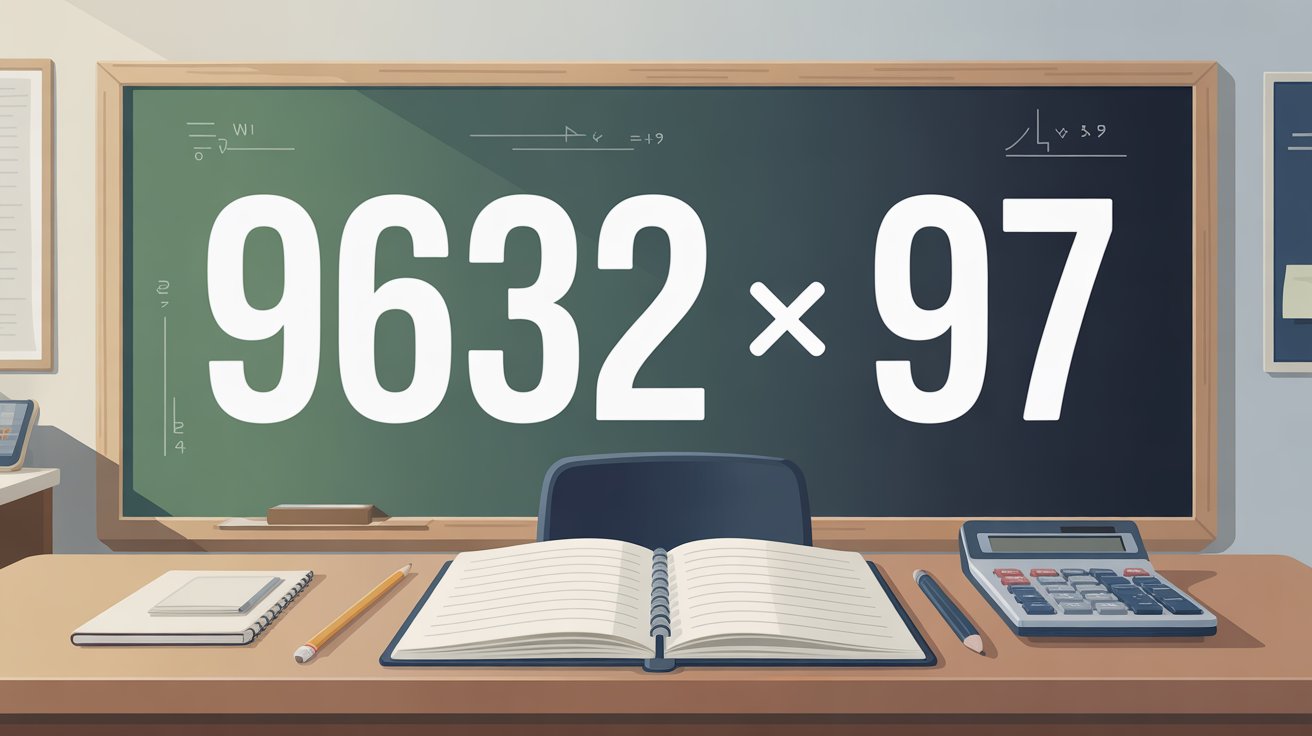
At first glance, 9632×97 looks like a basic multiplication problem. And technically, it is. The direct answer is 934,304. But if it were really that simple, people wouldn’t be searching for it so often. What makes 9632×97 interesting is not just the result, but how it can be solved efficiently, what it teaches about mental math, and why it keeps appearing in learning resources and curiosity-driven searches.
In this article, I’ll walk you through the meaning of 9632×97, show multiple ways to solve it, explain why this kind of problem matters, and explore why it keeps showing up online. Whether you’re a student, a parent, or just someone who enjoys number puzzles, there’s more here than just a final answer.
What Is 9632×97?
Simply put, 9632×97 means multiplying the number 9,632 by 97.
If we calculate it directly:
9632 × 97 = 934,304
That’s the final answer. But stopping here would miss the bigger picture. This problem is often used to teach shortcuts, estimation skills, and logical thinking, especially because 97 is very close to 100.
Why Problems Like 9632×97 Are Popular
You might wonder why this specific multiplication gets attention. The reason is simple: it sits right at the sweet spot between “too easy” and “too complex.”
It’s large enough to feel challenging but small enough to solve without a calculator if you know the right method. Teachers, math blogs, and learning platforms often use problems like 9632×97 to help learners build confidence with numbers.
I’ve noticed that many people searching for this problem aren’t just looking for the answer. They want to understand how to get there faster.
The Traditional Method: Step-by-Step Multiplication
Let’s start with the classic approach most of us learned in school.
9632 × 97
= 9632 × (90 + 7)
= (9632 × 90) + (9632 × 7)
9632 × 90 = 866,880
9632 × 7 = 67,424
Add them together:
866,880 + 67,424 = 934,304
This method is reliable and clear, especially for beginners. It breaks the problem into manageable parts and avoids mistakes.
The Smart Shortcut: Using 100 as a Reference
This is where things get interesting.
Since 97 is just 3 less than 100, we can rewrite the problem:
9632 × 97 = 9632 × (100 − 3)
Now calculate:
9632 × 100 = 963,200
9632 × 3 = 28,896
Subtract:
963,200 − 28,896 = 934,304
This approach is faster and easier once you get comfortable with it. I personally prefer this method because it feels more intuitive and reduces mental strain.
Why This Shortcut Works So Well
The beauty of this method lies in number relationships. Our brains handle round numbers like 100 far more easily than 97.
Instead of struggling with direct multiplication, we leverage a nearby “friendly” number and adjust the result. This strategy works not only for 97 but also for numbers like 98, 99, 101, and 102.
Once you understand this pattern, problems like 9632×97 stop feeling intimidating.
Mental Math Benefits of Solving 9632×97
Practicing problems like this strengthens several skills at once:
Number sense
Estimation accuracy
Confidence with subtraction
Logical thinking
Over time, you’ll start seeing numbers less as rigid symbols and more as flexible tools. That’s when math becomes enjoyable instead of stressful.
Estimating the Answer Before Solving
Another useful habit is estimation.
Since 97 is close to 100, you can estimate:
9632 × 100 ≈ 963,200
So you already know the real answer should be slightly less than that. When you finally calculate 934,304, it feels “right,” which helps catch errors quickly.
Estimation is especially useful in exams and real-world calculations where speed matters.
Where 9632×97 Applies in Real Life
You may not multiply 9,632 by 97 every day, but the thinking behind it shows up more often than you realize.
Calculating bulk prices with discounts
Estimating yearly costs from monthly expenses
Adjusting measurements or quantities
Quick budgeting decisions
The exact numbers may change, but the logic stays the same.
Why Students Often Struggle With Problems Like This
In my experience, the struggle isn’t about difficulty. It’s about mindset.
Many students see large numbers and immediately feel overwhelmed. They try to memorize steps instead of understanding relationships between numbers.
Once students learn shortcuts like the 100-minus method, their confidence increases quickly.
Common Mistakes When Solving 9632×97
Even simple math can go wrong if you rush. Some common errors include:
Forgetting to subtract correctly
Mixing up digits during subtraction
Multiplying by 97 directly without breaking it down
Misplacing zeros
The good news is that estimation helps catch most of these mistakes instantly.
Why This Problem Keeps Appearing Online
You’ll often see 9632×97 in tutorials, examples, and blog posts because it’s ideal for teaching multiple strategies at once.
It’s not random. It’s carefully chosen to show how math becomes easier when you stop treating numbers as isolated figures.
People also search for it because they want reassurance that their answer is correct.
Learning Beyond the Final Answer
The real lesson of 9632×97 isn’t the number 934,304. It’s the idea that math rewards understanding over memorization.
Once you see patterns, numbers stop feeling like obstacles. They become tools.
That shift makes a huge difference, especially for learners who believe they’re “bad at math.”
Using This Method for Other Problems
Try applying the same idea to similar problems:
4821 × 99
7500 × 98
1234 × 101
The logic stays consistent. You adjust from 100 and correct the result. This consistency builds confidence quickly.
Final Thoughts on 9632×97
So yes, 9632×97 equals 934,304. But more importantly, it represents a way of thinking that makes math simpler and more enjoyable.
Instead of fighting numbers, you work with them. That’s a skill worth developing, no matter your age or profession.
Once you master problems like this, even larger calculations start to feel manageable.
Frequently Asked Questions (FAQs)
What is the answer to 9632×97?
The correct answer is 934,304.
What is the fastest way to solve 9632×97?
The fastest method is multiplying by 100 and subtracting three times the number.
Why is 9632×97 used as an example problem?
Because it’s ideal for teaching mental math shortcuts and number relationships.
Can this method be used for other numbers?
Yes, especially for numbers close to 100, such as 98, 99, 101, and 102.
Is estimation important when solving multiplication problems?
Absolutely. Estimation helps verify answers and catch mistakes early.
Do problems like 9632×97 improve mental math skills?
Yes, they strengthen number sense, logic, and calculation confidence.
If you found this article informative, feel free to check out our other articles as well.